OMEGA Speedmaster · 2026
The Apollo Chronograph
When the systems went dark, time remained.
14
A small measure of time. An impossible amount of trust.
In April 1970, an oxygen-tank failure forced Apollo 13 to abandon its lunar landing. The spacecraft was powered down to conserve energy, leaving the crew to make a critical course correction by hand.
The engine burn had to last exactly fourteen seconds. That interval was measured on an OMEGA Speedmaster.
The film
Precision becomes a form of survival.
A tribute to the contrast between the silent vacuum of space and the mechanical pulse that continued inside the watch.
From silence into motion.
The threshold
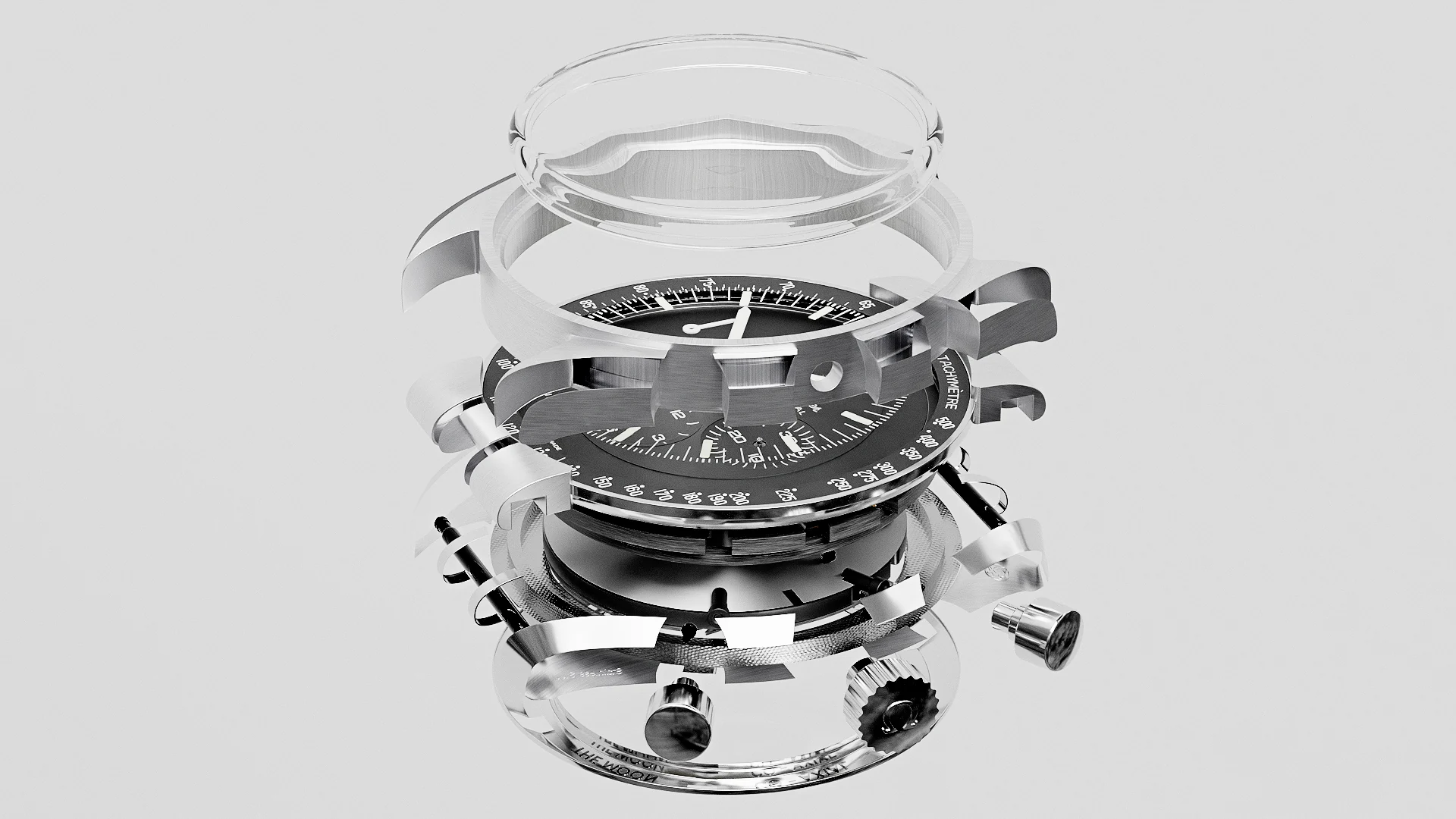
The film begins with the watch dispersed into components: a mechanism suspended in a white, weightless field.
As the parts align, the object becomes legible. Complexity resolves into purpose.

Trust begins where the eye cannot see.
The mechanism
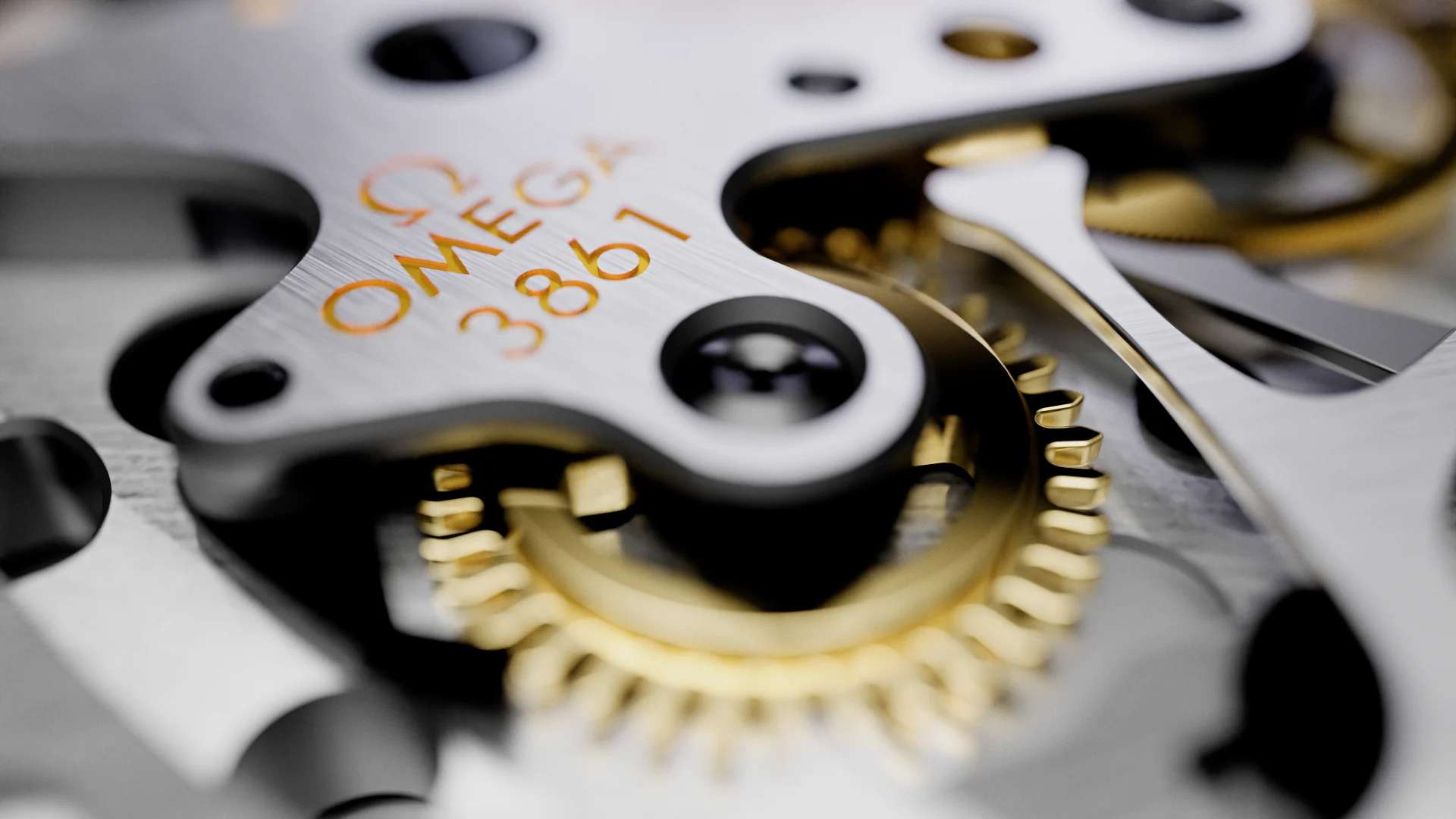
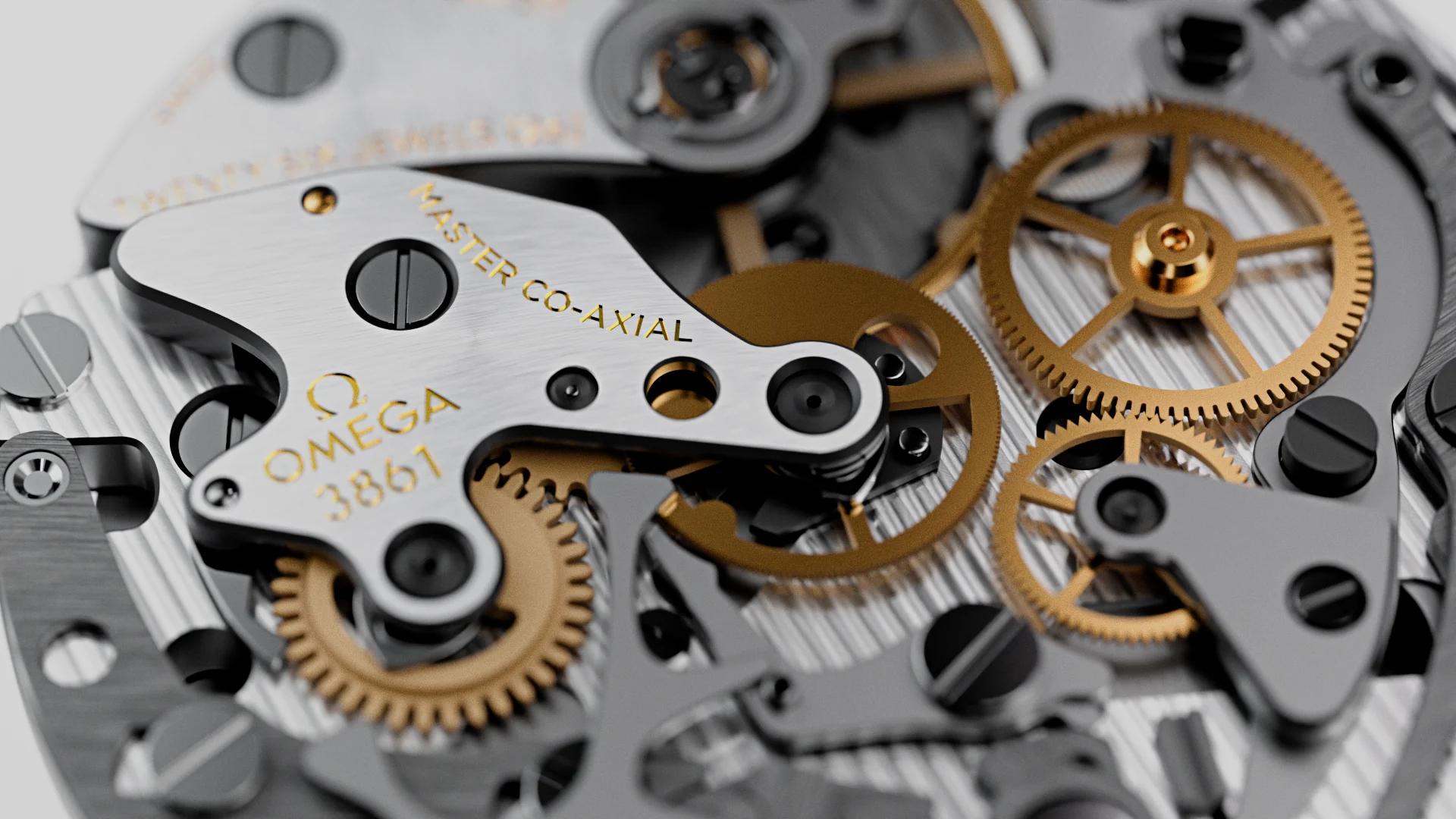
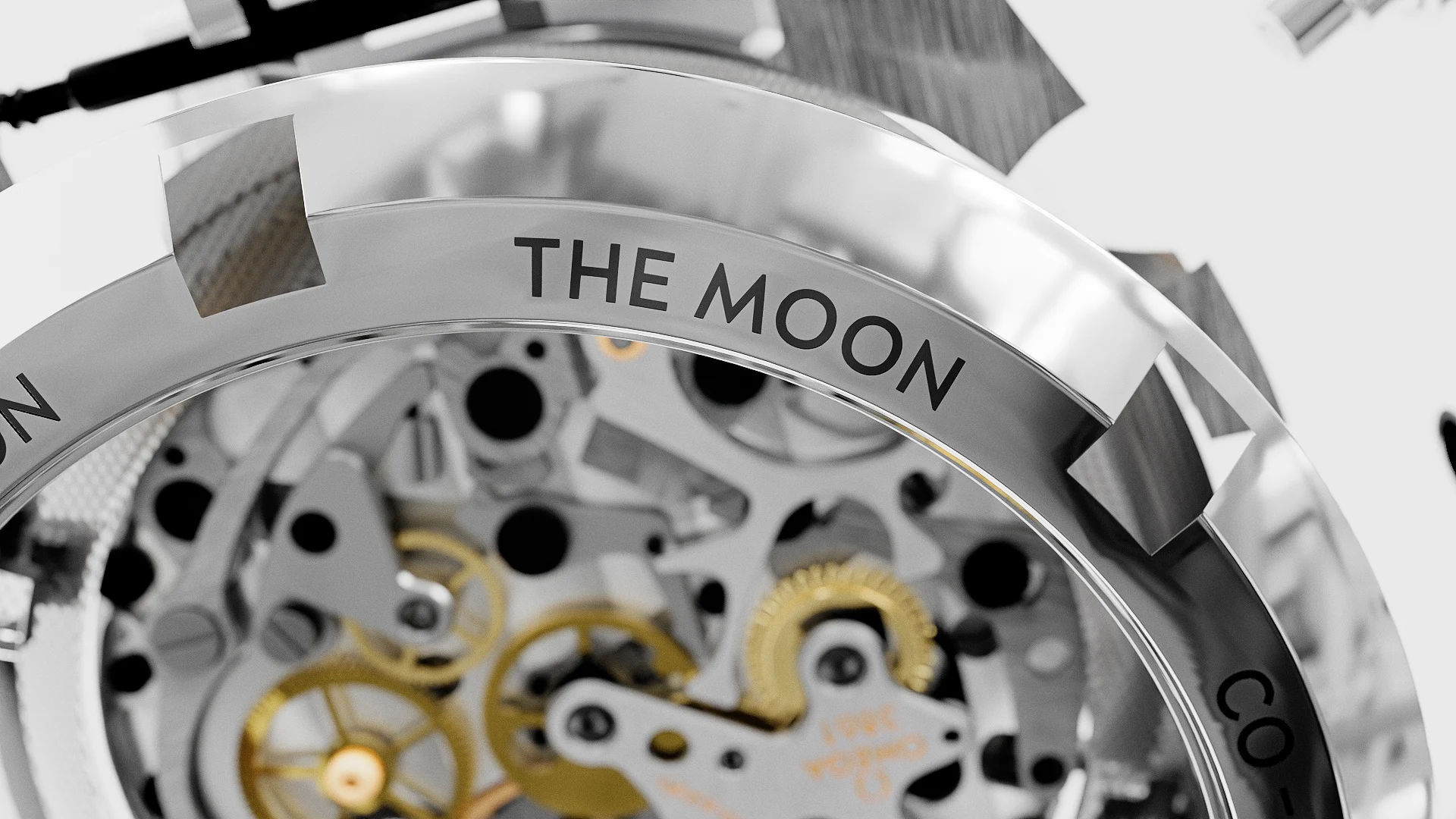
The visual language moves inward, from the complete chronograph to the geometry of the calibre.
Steel, screws and gears are treated less as decoration than as evidence: every visible detail belongs to a system built to measure.

An instrument, not an ornament.
The object
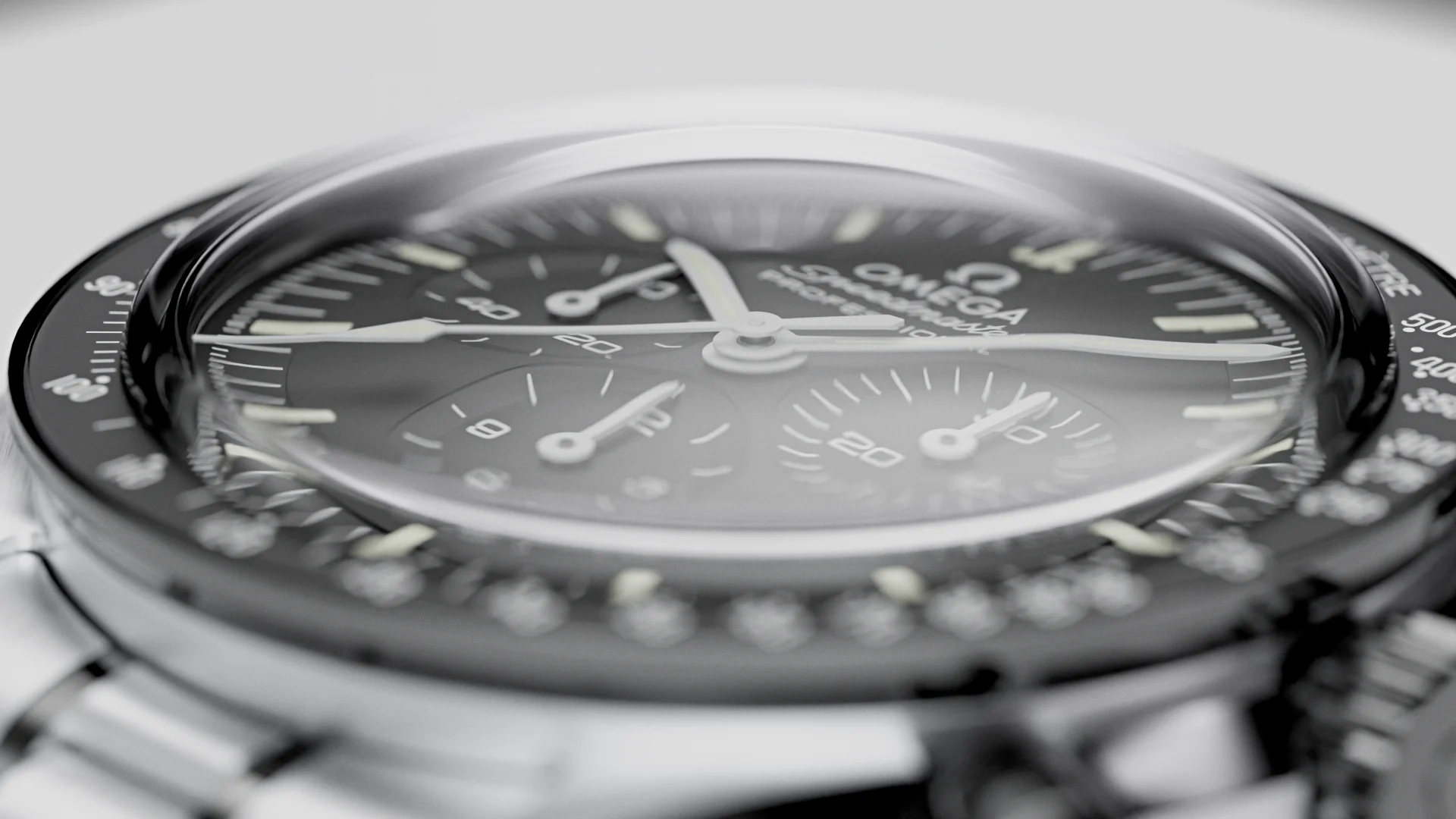
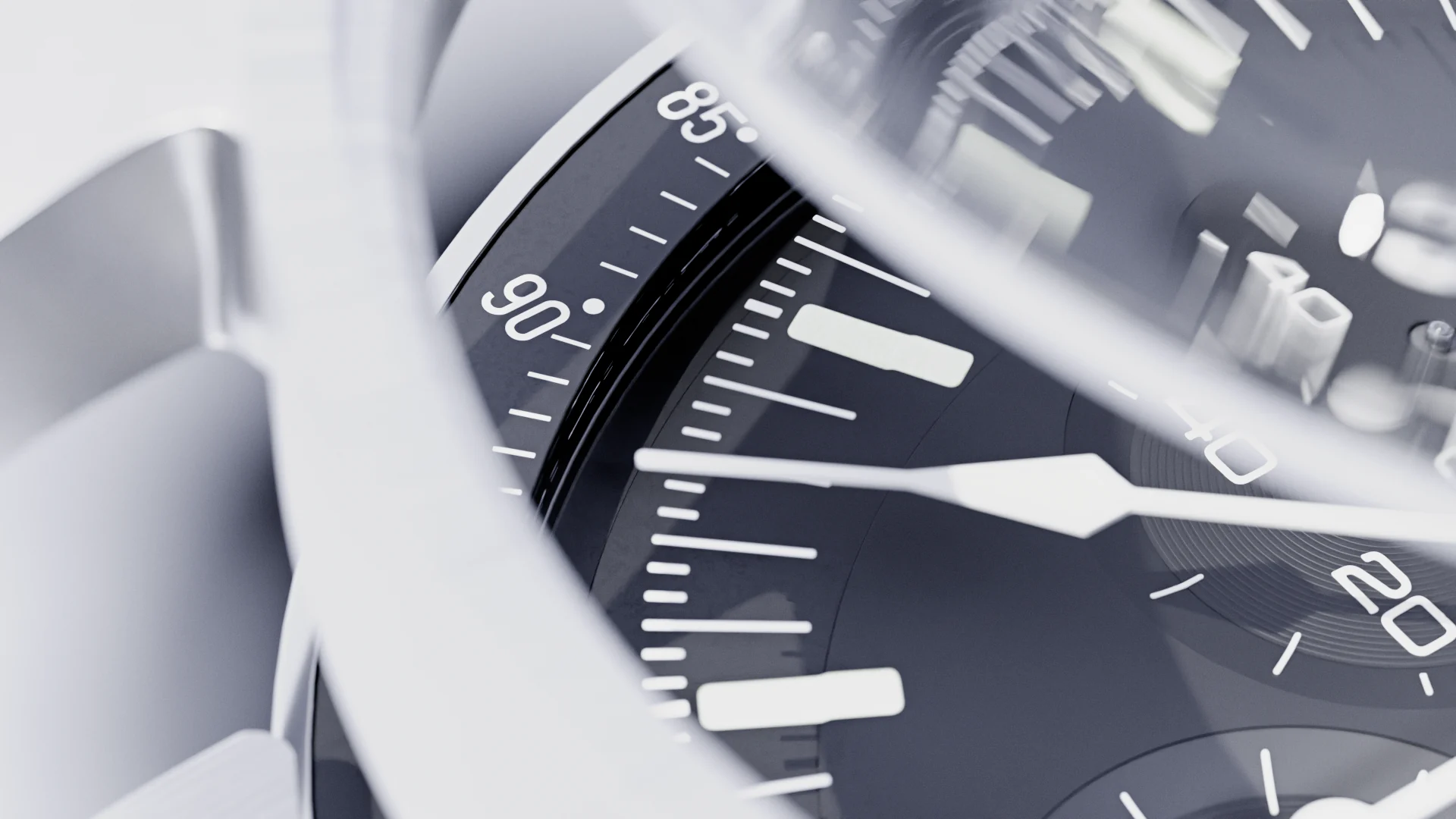
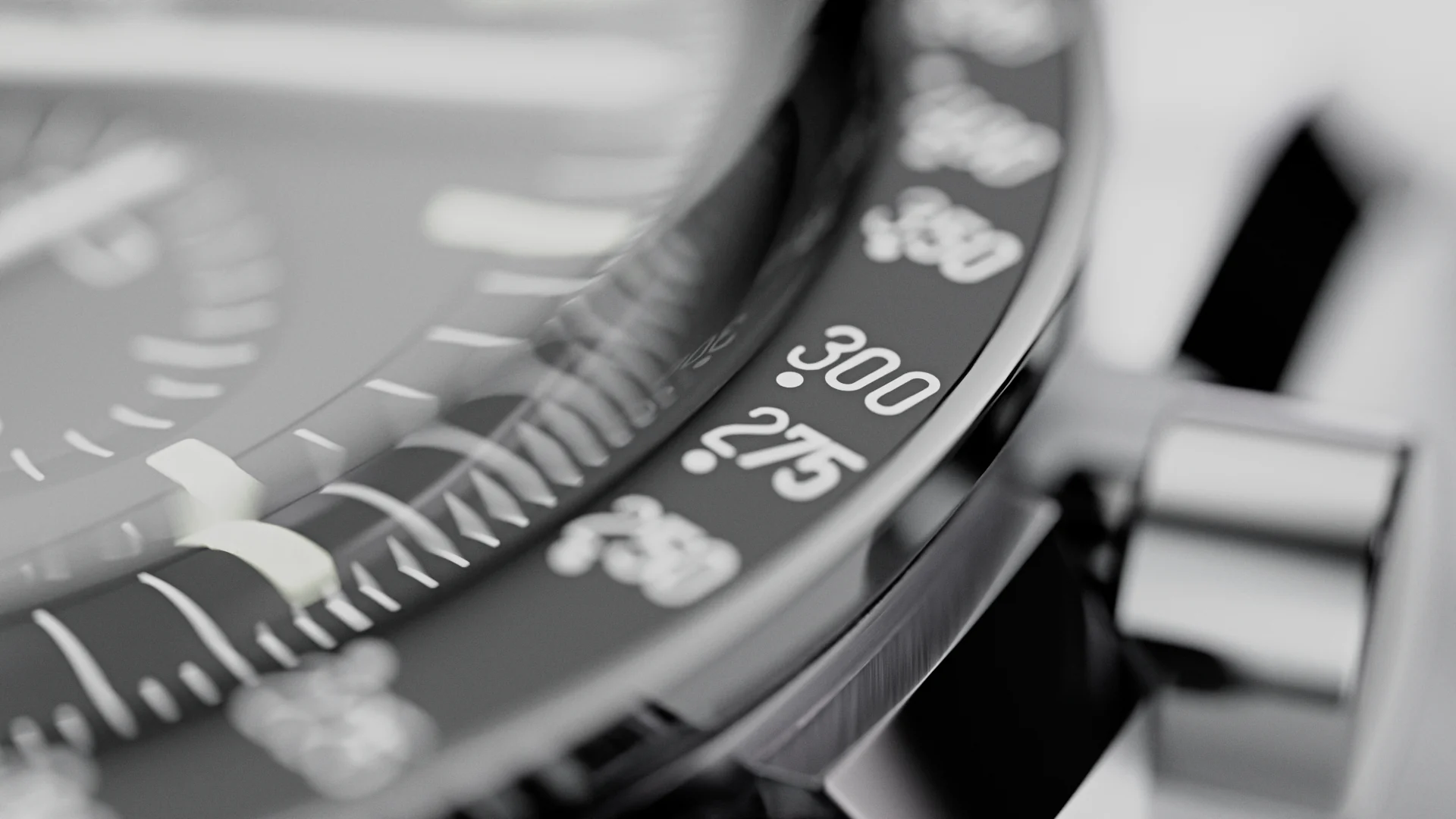
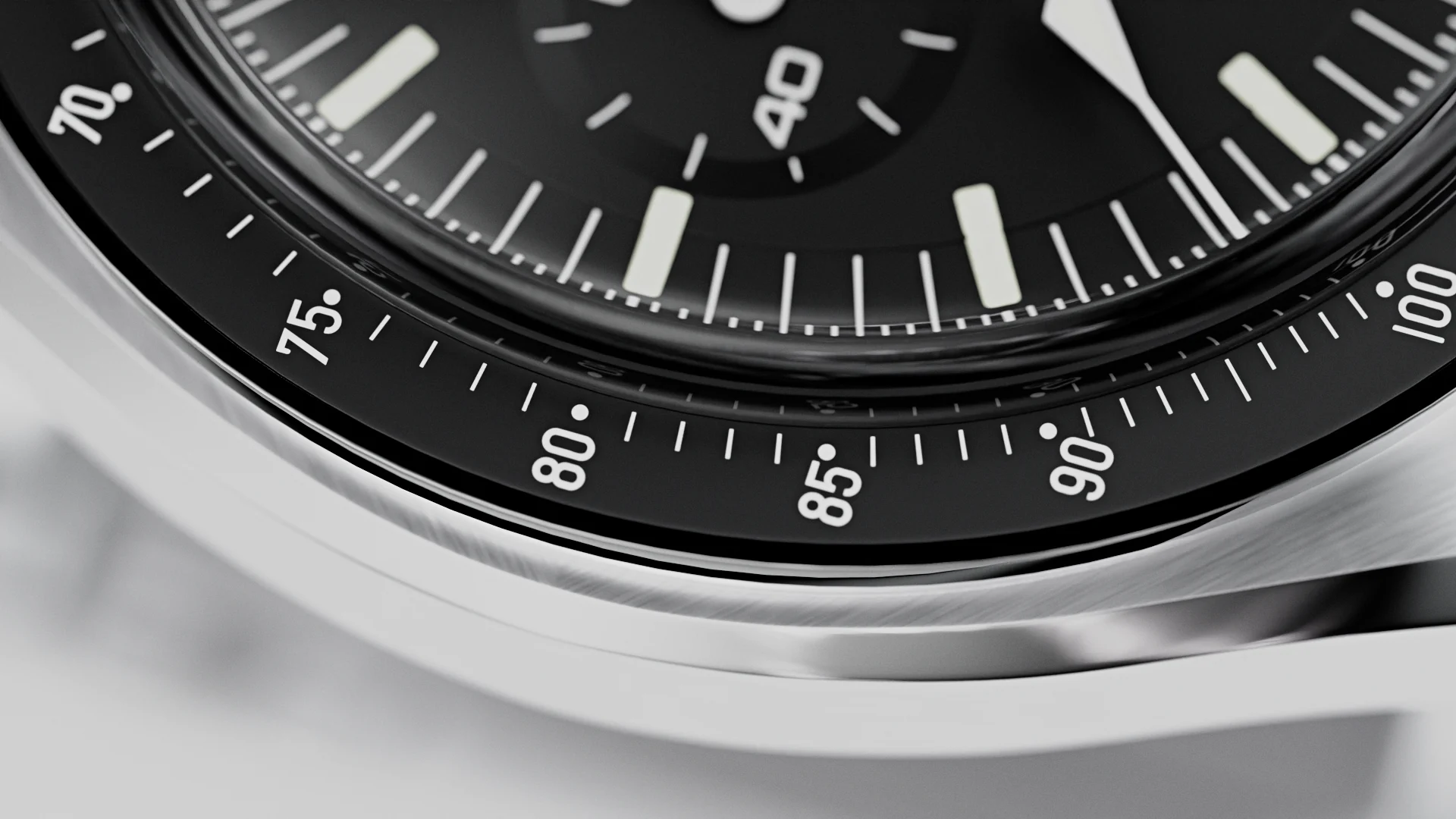
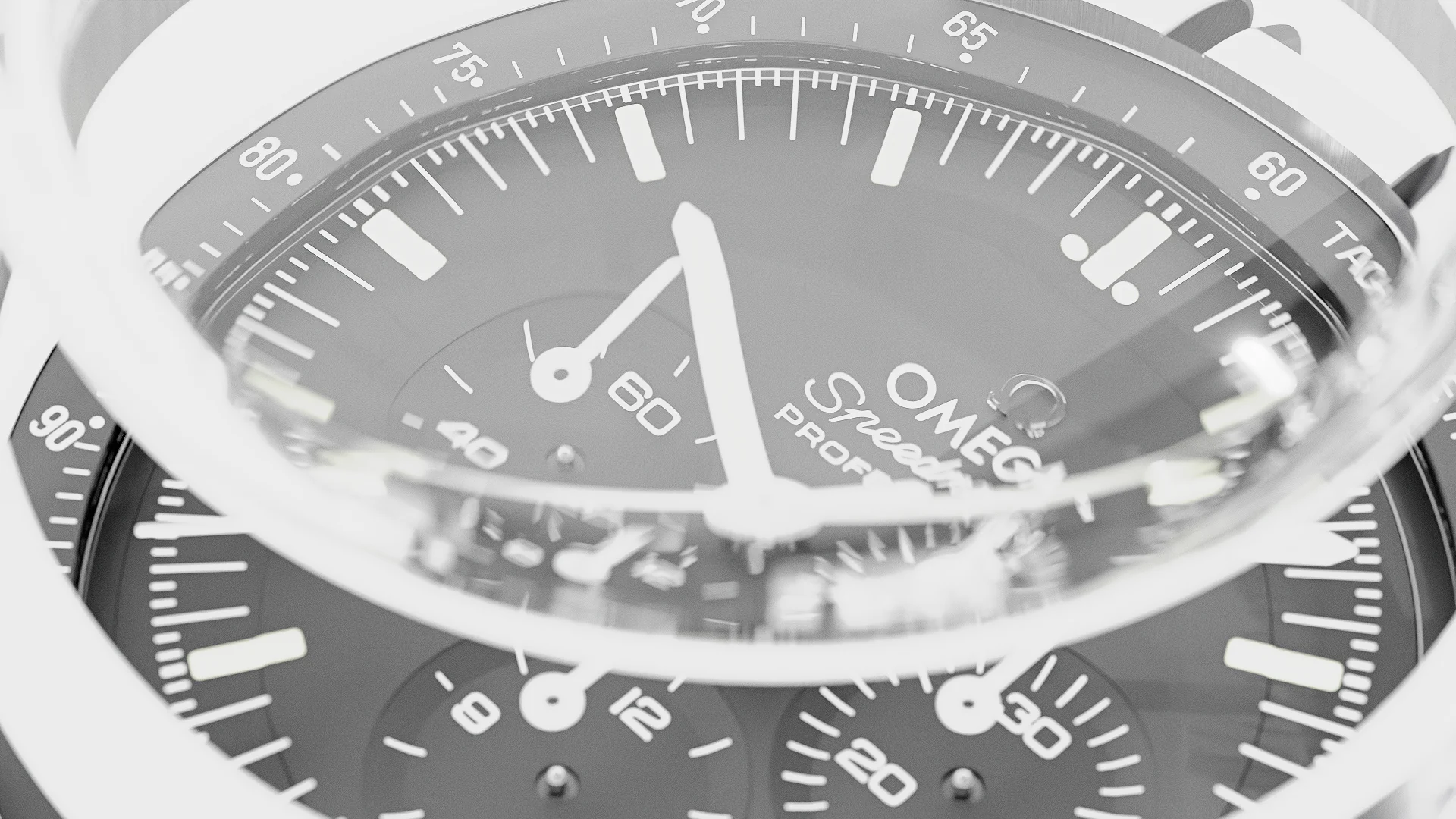
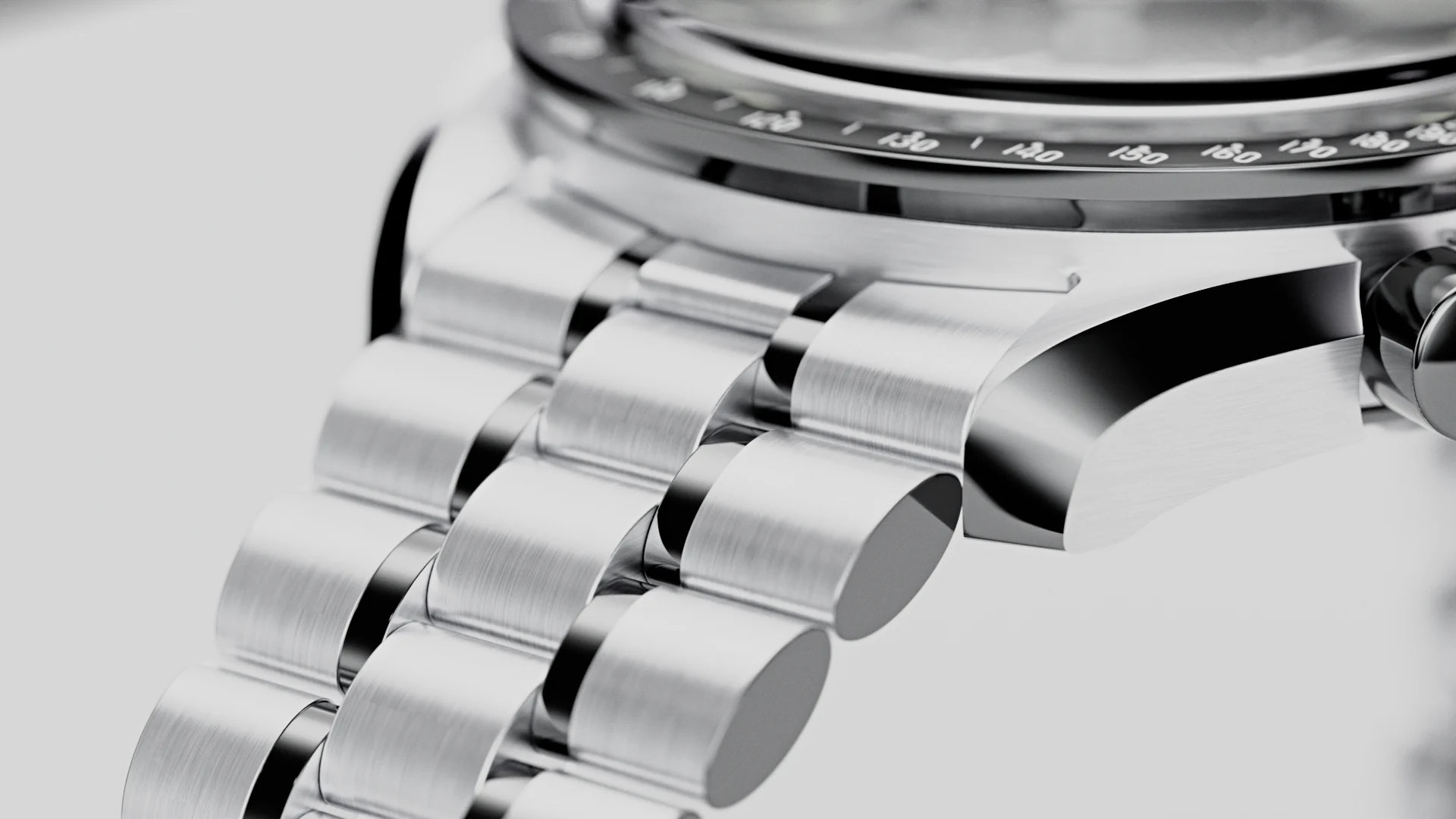
The Speedmaster is presented through the points where hand, mechanism and information meet: crown, bezel, dial and case.
The camera stays close. Precision is communicated through proportion, restraint and material response.

The mechanism returns as one object.
The complete form
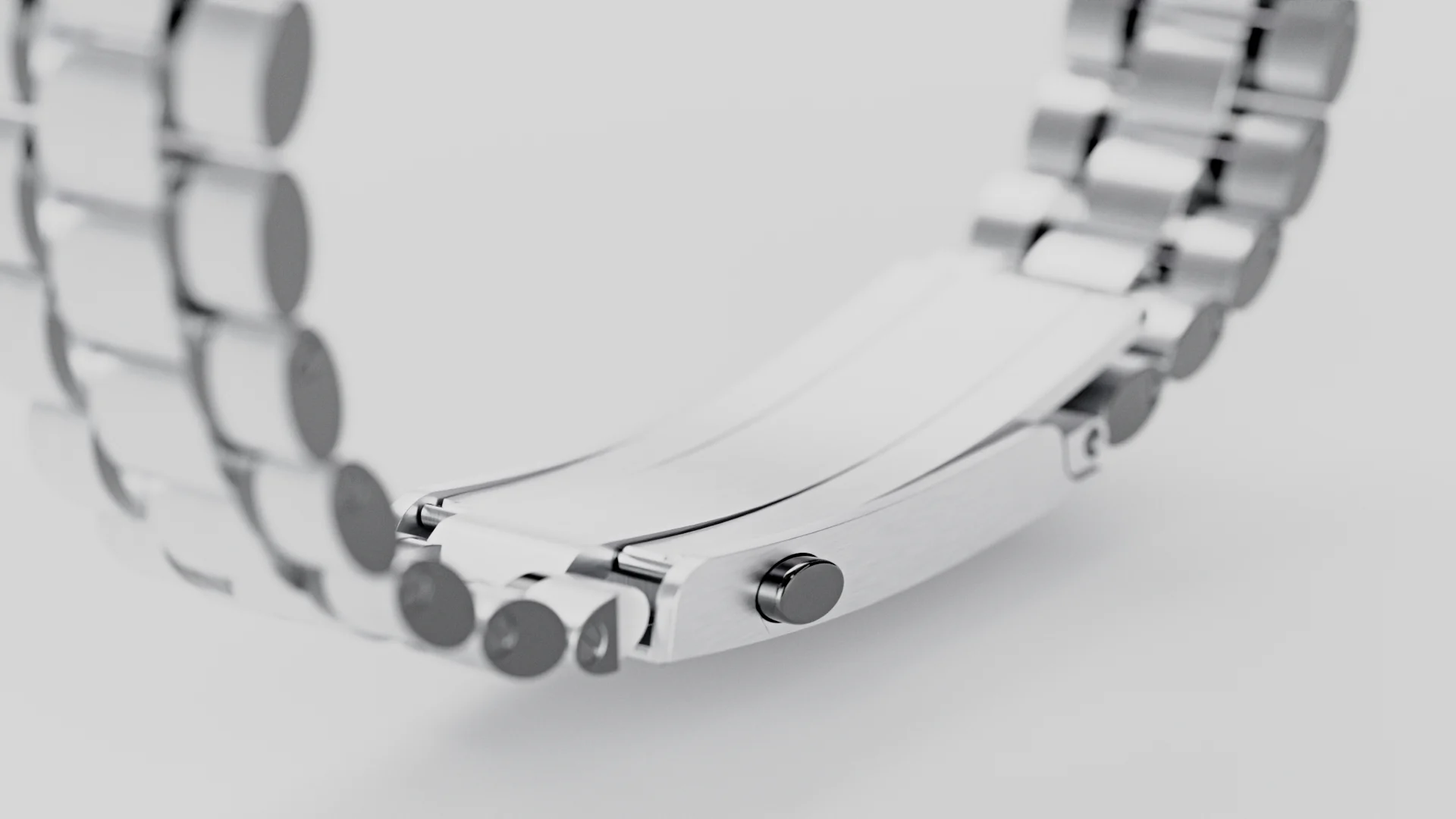
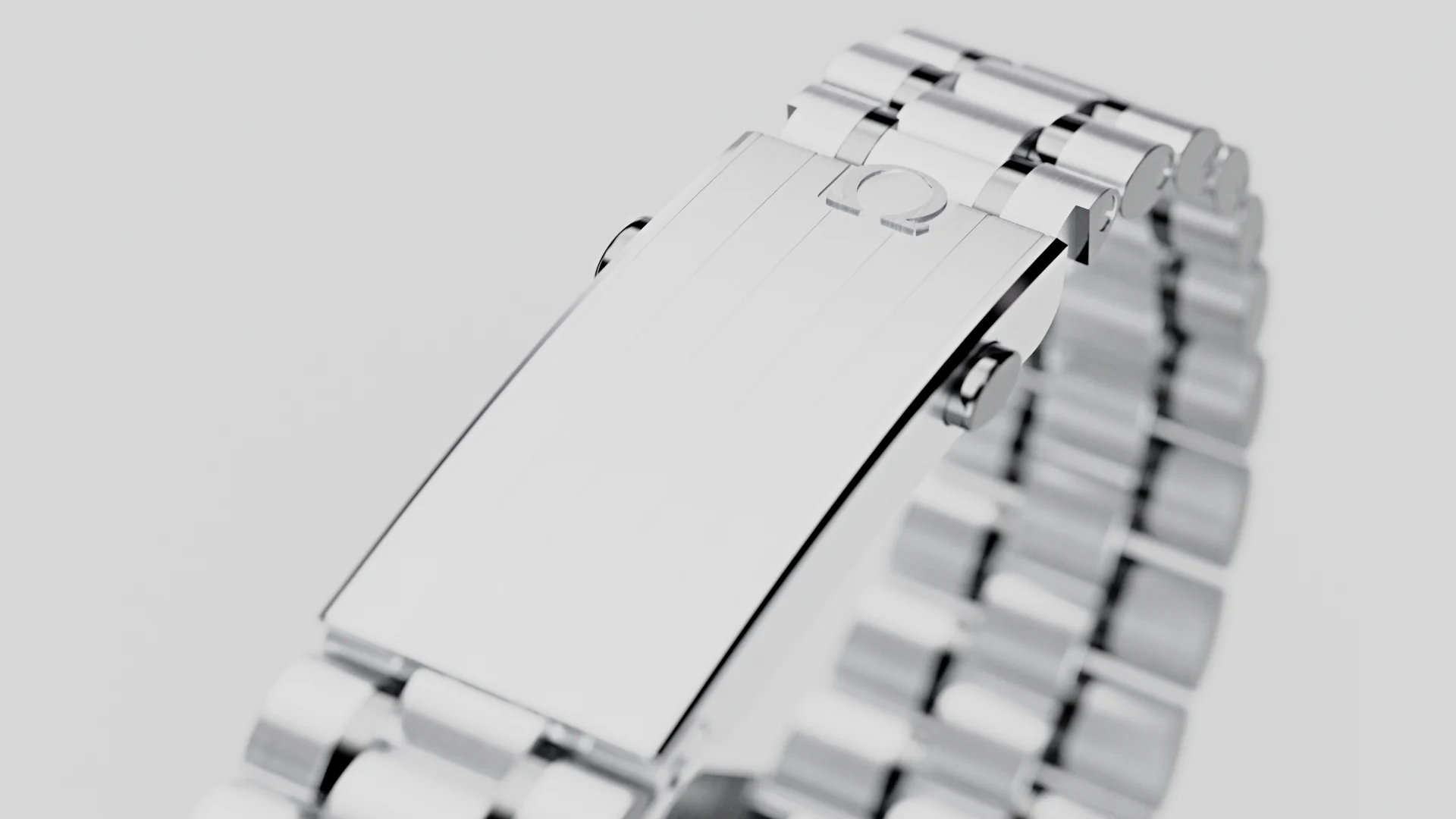
After the movement and the measurements, the final sequence restores the whole.
Case and bracelet become one continuous piece of engineering—quiet, legible and ready to be relied upon.
Project details
A study of the moment when precision became trust.
- Title
- The Apollo Chronograph
- Subject
- OMEGA Speedmaster
- Context
- Independent study
- Created by
- Lamek Felix
Independent / uncommissioned concept. Not affiliated with or commissioned by OMEGA or NASA.
Historical references: NASA — Apollo 13 Mission Details · OMEGA — Apollo 13: A Successful Failure
Final thought